



Xsens Sirius RTK GNSS/INS Modules

Xsens Sirius RTK GNSS/INS Modules are designed to maintain positioning accuracy and orientation stability where conventional GNSS/INS systems degrade. These modules combine a quad-band GNSS receiver with advanced sensor fusion to provide reliable, high-accuracy positioning and orientation. The Sirius RTK GNSS/INS modules offer advanced sensor fusion for stable orientation and reduced drift. These next-generation GNSS/INS modules feature flexible interfaces, including RS232, RS422, CAN, and CAN-FD. The Sirius GNSS/INS modules provide uncertainty output for real-time data quality assessment and provide future-proof support for next-generation GNSS signals. These RTK GNSS/INS modules are MIL-STD-202 tested for shock, vibration, and environmental robustness. Typical applications include autonomous ground vehicles, robotics, industrial automation, marine surface, subsea vehicles, offshore, marine heave compensation, surveying, and mapping systems.
Features
- Quad-band GNSS receiver (u-blox ZED-X20P) for improved satellite visibility
- Flexible interfaces:
- RS232
- RS422
- CAN
- CAN-FD
- Support for modern high-precision services (PointPerfect and Galileo HAS)
- Reliable positioning in urban canyons and partially obstructed environments
- Advanced sensor fusion for stable orientation and reduced drift
- MIL-STD-202 tested for shock, vibration, and environmental robustness
- Heave output for marine and offshore applications
- Uncertainty output for real-time data quality assessment
- Future-proof support for next-generation GNSS signals
Applications
- Autonomous ground vehicles (AGV and UGV)
- Robotics and industrial automation
- Marine surface and subsea vehicles (USV, ROV, and AUV)
- Offshore and marine heave compensation
- Surveying and mapping systems
- Construction, mining, and agriculture (AgTech)
- Aerospace and defense platforms
Specifications
- 4.5V to 24V input voltage range
- <1W power consumption (typical)
- Magnetometer:
- ±8G standard full range
- 1mG total RMS noise
- 0.2% non-linearity
- 0.25mG resolution
- Accelerometer:
- ±8G standard full range
- 15µg in-run bias stability
- 470Hz bandwidth (-3dB)
- 15µg/√Hz noise density
- Gyroscope:
- ±3000°/s standard full range
- 7°/h in-run bias stability
- 400Hz bandwidth (-3dB)
- 0.003°/s/√Hz noise density
- Interfaces/IO:
- CAN, CAN-FD, RS232, and RS422 interfaces
- SyncIn, SyncOut, and ClockSync options
- Xbus, ASCII (NMEA), CAN, and CAN-FD protocols
- 1ppm clock drift
- Up to 2kHz and 400Hz SDI output frequency range
- Gyr, Acc, Mag, and GNSS built-in self-test
- Mechanical:
- -40°C to 85°C operating temperature range
- IP68 rated
- Aluminum casing material
- No restriction, full 360° in all axes mounting orientation
- 56.50mm x 40.9mm x 36.75mm dimensions
- CE, FCC, RoHS, and MIL-STD-202 certifications
Additional Resources
Development Tools

Xsens Sirius RTK GNSS/INS Development Kits
Designed for centimeter-level positioning and orientation in the most challenging environments.

Xsens Sirius AHRS/VRU/IMU Development Kit
Enables the development of the Xsens Sirius Rugged Inertial Measurement Units (IMUs).
Related Products
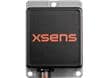
Xsens Sirius Rugged Inertial Measurement Units
Delivers consistent performance for autonomous systems operating in demanding conditions.
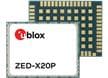
u-blox ZED-X20P All-Band High Precision GNSS Modules
Integrated all-band GNSS with signal modernization and innovative positioning algorithms.
Dimensions
