



Vishay ST Series Capacitors
Vishay ST Series Capacitors are hermetically sealed and have a 6VDC up to 125VDC voltage range. The ST series is broken into four different capacitors: ST, STE, STA, and STH. The ST series is made up of SuperTan® wet tantalum capacitors that offer very high capacitance, low ESR, and high ripple current. ST capacitors are housed in an all tantalum, hermetically sealed case, making them suitable in the defense and aerospace industries.
STE capacitors are SuperTan extended wet tantalum capacitors that combine the reliability of wet tantalum with the capacitance stability of solid tantalum, and there are no circuit impedance restrictions.
The STA capacitors from Vishay are wet tantalum capacitors with a hermetic seal and axial-leaded terminations. The rugged design is well-suited for low voltage filtering and energy storage applications.
STH capacitors offer improved vibration capability, enhanced performance, and a highly reliable design. Model STH tantalum-case electrolytic capacitors feature increased thermal shock capability of up to 300 cycles.
Features
- Common
- All tantalum case
- Hermetically sealed
- ST
- High capacitance
- Low ESR
- High ripple current
- Low DCL
- STA
- Axial-leaded terminations
- High and stable capacitance
- High reliability
- STH
- Improved vibration capability
- Increased thermal shock capability of up to 300 cycles
- Enhanced performance
Specifications
- ST
- 10µF to 2200µF capacitance range
- 25VDC to 125VDC voltage range
- 120Hz to 100kHz frequency
- -55°C to +85°C operating temperature range
- STE
- 18µF to 2200µF capacitance range
- 10V to 125V voltage range
- -55°C to +85°C operating temperature range
- STA
- 150µF to 4700µF capacitance range
- 6VDC to 15VDC voltage range
- -55°C to +125°C operating temperature range
- STH
- 47µF to 1500µF capacitance range
- 60VDC to 125VDC voltage range
- -55°C to +85°C operating temperature range
Datasheets
Related Capacitors

Vishay / Sprague Wet Tantalum Capacitors
Broad capacitance range of 10μF to 22,000μF and working voltages of 6.3VDC to 125VDC at +85°C.

Vishay ST110 Wet Tantalum Capacitors
All-tantalum, hermetically sealed case is manufactured to withstand hazardous environments.
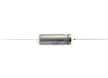
Vishay / Sprague STH SuperTan® Wet Tantalum Capacitors
Provide enhanced performance with military H-level shock and vibration capabilities.