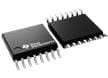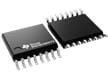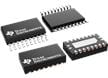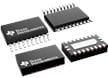

SN74AHCT273N

Texas Instruments
595-SN74AHCT273N
SN74AHCT273N

Mfr.:

Description:
Flip-Flops Octal

ECAD Model:
Download the free Library Loader to convert this file for your ECAD Tool. Learn more about the ECAD Model.

In Stock: 1.039

Stock:
1.039 Can Dispatch Immediately
Factory Lead Time:
12 Weeks Estimated factory production time for quantities greater than shown.
Minimum: 1   Multiples: 1
Unit Price:
-,-- €
Ext. Price:
-,-- €
Est. Tariff:

Pricing (EUR)

Qty. Unit Price
Ext. Price
0,80 € 0,80 €
0,579 € 5,79 €
0,521 € 10,42 €
0,458 € 45,80 €
0,429 € 111,54 €
0,411 € 205,50 €
0,397 € 397,00 €

Product Attribute Attribute Value Select Attribute
Texas Instruments
Product Category: Flip-Flops
RoHS:  
D-Type Flip-Flop
AHCT
8 Circuit
CMOS
PDIP-20
TTL
Non-Inverting
9.2 ns
- 8 mA
8 mA
4.5 V
5.5 V
Through Hole
- 40 C
+ 125 C
Tube
Brand: Texas Instruments
Number of Input Lines: 3
Number of Output Lines: 1 Line
Product Type: Flip Flops
Series: SN74AHCT273
Factory Pack Quantity: 20
Subcategory: Logic ICs
Unit Weight: 1,199 g
Products found:
To show similar products, select at least one checkbox
Select at least one checkbox above to show similar products in this category.
Attributes selected: 0

This functionality requires JavaScript to be enabled.

TARIC:
8542319000
CNHTS:
8542399000
CAHTS:
8542390000
USHTS:
8542390090
JPHTS:
8542390990
MXHTS:
8542310399
ECCN:
EAR99

SN74AHCT273/SN74AHCT273-Q1 Octal D-Type Flip-Flops

Texas Instruments SN74AHCT273/SN74AHCT273-Q1 Octal D-Type Flip-Flops include 8 positive-edge-triggered D-type flip-flops with a direct Clear (CLR) input. These devices are designed to store and synchronize digital data across eight channels. Each flip-flop has a dedicated data input (D) and output (Q), while all flip-flops share a common clock (CLK) and clear (CLR) signal. The outputs change state on the rising edge of the clock signal, provided the clear input is inactive (high). When the clear input is asserted (low), all outputs are asynchronously reset to low, regardless of the clock or data inputs. Typical applications include buffers and storage registers, servers, network switches, memory systems, databases, pattern generators, and shift registers.