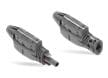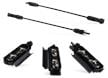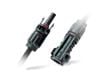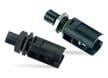

2308033-1

TE Connectivity
571-2308033-1
2308033-1

Mfr.:

Description:
Solar Connectors / Photovoltaic Connectors SOLARLOK 2.0 POSIT. CONN. ASMB.

Lifecycle:
Factory Special Order:
Obtain a quote to verify the current price, lead-time and ordering requirements of the manufacturer.
ECAD Model:
Download the free Library Loader to convert this file for your ECAD Tool. Learn more about the ECAD Model.

Availability

Stock:
Not Available

Pricing (EUR)

Product Attribute Attribute Value Select Attribute
TE Connectivity
Product Category: Solar Connectors / Photovoltaic Connectors
RoHS:  
REACH - SVHC:
Cable Couplers
Cable
Brand: TE Connectivity
Contact Material: Copper Alloy
Contact Plating: Tin
Gender: Female
Housing Material: Polyphenylene Ether (PPE)
Number of Ports: 1 Port
Number of Positions: 1 Position
Product Type: Solar Connectors / Photovoltaic Connectors
Factory Pack Quantity: 50
Subcategory: Solar Connectors / Photovoltaic Connectors
Tradename: Solarlok
Wire Gauge: 10 AWG
Unit Weight: 32,162 g
Products found:
To show similar products, select at least one checkbox
Select at least one checkbox above to show similar products in this category.
Attributes selected: 0

Compliance Codes
CNHTS:
8536909006
USHTS:
8535908060
ECCN:
EAR99
Origin Classifications
Country of Origin:
Czech Republic
Assembly Country of Origin:
Not available
Country of Diffusion:
Not available
The country is subject to change at the time of shipment.

SOLARLOK 2.0 Connectors

TE Connectivity’s (TE) SOLARLOK 2.0 Connectors are a field-installable product that uses Insulation Displacement Contact (IDC) technology to connect panels and cables without needing any special tools. This ensures an easy, quick, and reliable connection. TE SOLARLOK 2.0 Connectors incorporate a closed-spring cage to ensure constant termination force. Cables do not have to be stripped before connection, which makes installation approximately 80% faster than with standard photovoltaic (PV) DC connectors that contain multiple components and crimp contacts. Since no custom tools are needed, total system cost-effectiveness is greater.