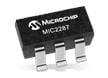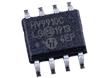

HV9921N3-G

Microchip Technology
689-HV9921N3-G
HV9921N3-G

Mfr.:

Description:
LED Lighting Driver ICs Switchmode PWM

ECAD Model:
Download the free Library Loader to convert this file for your ECAD Tool. Learn more about the ECAD Model.

In Stock: 162

Stock:
162 Can Dispatch Immediately
Factory Lead Time:
4 Weeks Estimated factory production time for quantities greater than shown.
Minimum: 1   Multiples: 1
Unit Price:
-,-- €
Ext. Price:
-,-- €
Est. Tariff:

Pricing (EUR)

Qty. Unit Price
Ext. Price
0,748 € 0,75 €
0,619 € 15,48 €
0,55 € 55,00 €

Product Attribute Attribute Value Select Attribute
Microchip
Product Category: LED Lighting Driver ICs
RoHS:  
1 Output
Buck
20 mA
TO-92-3
400 V
20 V
170 kHz
Adjustable
- 40 C
+ 85 C
Constant Current
Bulk
Brand: Microchip Technology
Input Voltage: 20 V to 400 V
Mounting Style: Through Hole
Number of Channels: 1 Channel
Pd - Power Dissipation: 740 mW
Product Type: LED Lighting Drivers
Factory Pack Quantity: 1000
Subcategory: Driver ICs
Supply Current - Max: 350 uA
Unit Weight: 453,600 mg
Products found:
To show similar products, select at least one checkbox
Select at least one checkbox above to show similar products in this category.
Attributes selected: 0

This functionality requires JavaScript to be enabled.

TARIC:
8541210000
CNHTS:
8542399000
CAHTS:
8541210000
USHTS:
8541210095
JPHTS:
8541210101
KRHTS:
8541219000
MXHTS:
85412101
ECCN:
EAR99

IS32LT3175N/P Single-Channel Linear LED Drivers

ISSI IS32LT3175N/P Single-Channel Linear LED Drivers come with fade in/out and PWM dimming. The regulators serve as a stand-alone LED driver-configurable from 20mA to 150mA with external resistors, no microcontroller is necessary. A logic level “courtesy light” signal from the PWM pin can be interfaced to precisely drive the LED channel. The IS32LT3175P obtains a positive polarity PWM signal. In addition, the IS32LT3175N obtains a negative polarity PWM signal. The regulator integrates a 63-step fade-in and fades out the algorithm (Gamma correction). This causes the output LED current to increasingly rise up to the full source value after the EN pin is pulsed.