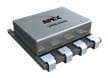

VRE102CA-3

Apex Microtechnology
137-VRE102CA-3
VRE102CA-3

Mfr.:

Description:
Voltage References ref+/-10V, 0.8mV error, 20/40C, SPCL TEST

ECAD Model:
Download the free Library Loader to convert this file for your ECAD Tool. Learn more about the ECAD Model.

Availability

Stock:
Non-Stocked
Factory Lead Time:
21 Weeks Estimated factory production time.
Minimum: 1   Multiples: 1
Unit Price:
-,-- €
Ext. Price:
-,-- €
Est. Tariff:
This Product Ships FREE

Pricing (EUR)

Qty. Unit Price
Ext. Price
299,17 € 299,17 €
258,71 € 2.587,10 €
248,69 € 6.217,25 €
100 Quote

Product Attribute Attribute Value Select Attribute
Apex Microtechnology
Product Category: Voltage References
RoHS:  
Bulk
Brand: Apex Microtechnology
Country of Assembly: Not Available
Country of Diffusion: Not Available
Country of Origin: US
Product Type: Voltage References
Factory Pack Quantity: 1
Subcategory: PMIC - Power Management ICs
Unit Weight: 2,605 g
Products found:
To show similar products, select at least one checkbox
Select at least one checkbox above to show similar products in this category.
Attributes selected: 0

USHTS:
8542390090
MXHTS:
8542399999
ECCN:
EAR99

VRE102 Ultrastable ±10V Output Voltage Reference

Apex Microtechnology VRE102 Ultrastable ±10V Output Voltage Reference provides a ±1.0mV initial accuracy and a 1.09 ppm/°C temperature coefficient over the full military temperature range. A multipoint laser compensation technique improves accuracy. Other performance parameters, including initial accuracy, warm-up drift, line regulation, and long-term stability, have also been improved. These parameters make the Apex Microtechnology VRE102 an accurate and stable 10V reference.

Precision Reference Devices

Apex Microtechnology Precision Reference Devices provide ultrastable sine wave outputs and a temperature coefficient over the full military temperature range. Accuracy improvement of the Apex Microtechnology Precision Reference devices is possible through a unique proprietary multipoint laser compensation technique. Significant improvements have been made in other performance parameters, including warm-up drift, line regulation, and long-term stability.