
MAX14937WEVKIT#

Analog Devices / Maxim Integrated
700-MAX14937WEVKIT#
MAX14937WEVKIT#

Mfr.:

Description:
Interface Development Tools EVKit for 5KVrms 2 channel I2C Digital I

In Stock: 1

Stock:
1 Can Dispatch Immediately
Factory Lead Time:
10 Weeks Estimated factory production time for quantities greater than shown.
Minimum: 1   Multiples: 1
Unit Price:
-,-- €
Ext. Price:
-,-- €
Est. Tariff:

Pricing (EUR)

Qty. Unit Price
Ext. Price
42,15 € 42,15 €

Product Attribute Attribute Value Select Attribute
Analog Devices Inc.
Product Category: Interface Development Tools
RoHS:  
Evaluation Kits
Digital Isolator
MAX14937
Bulk
Brand: Analog Devices / Maxim Integrated
Description/Function: 5 KVrms 2 channel I2C digital isolator
Interface Type: I2C
Operating Supply Voltage: 5 V
Product Type: Interface Development Tools
Series: MAX14937
Factory Pack Quantity: 1
Subcategory: Development Tools
Unit Weight: 209 g
Products found:
To show similar products, select at least one checkbox
Select at least one checkbox above to show similar products in this category.
Attributes selected: 0

TARIC:
8473302000
CNHTS:
8543909000
CAHTS:
8473302000
USHTS:
8473301180
MXHTS:
8473300401
ECCN:
EAR99

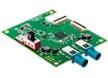
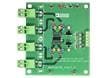
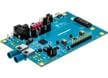
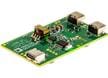
MAX14933 & MAX14937 Evaluation Kits

Analog Devices MAX14933 and MAX14937 Evaluation Kits are demonstration and development platforms for the MAX14933 and MAX14937 I2C Isolators. The MAX14933 and MAX14937 are two-channel 2.75kVRMS or 5kVRMS I2C digital isolators designed to transfer digital signals between circuits with different power domains at ambient temperatures up to 125°C. The MAX14933 and MAX14937 isolators offer two bi-directional, open-drain channels for applications such as I2C that require data to be transmitted in both directions on the same line. These isolators feature independent 2.25V to 5.5V supplies on each side.

Industrial 4.0 Smart Factory Solutions

Analog Devices Industrial 4.0 Smart Factory Solutions is a concept that envisions factories of tomorrow as vastly more integrated, automated, and flexible. Using these solutions, factories can become faster and more efficient in churning out goods desired by the changing marketplace. Factory automation is concerned with the automatic control of process machinery. A process controller monitors and measures operational and environmental variables. The controller then sends actuation commands out to control devices or alarms. The controllers are usually microcontroller-based machines with an architecture optimized to meet the needs of the factory and application.